MENU
My list

Lucerne – Saving Fertiliser Costs

Just 100 years to be an overnight success!

The dramatic increase in fertiliser prices is not looking to slow down soon, many farmers are looking at medium- and longer-term alternatives. Some have said that this is a rude wake-up call to learn from what past generations before had done and done well.


Lucerne has been around for over 100 years, but in has been eclipsed by strong marketing and distributors’ need for farmers to spend. Maybe now is the time for both Lucerne and Red Clover to emerge as the incredible crops they truly are. They are both increasingly popular amongst farmers who acknowledge the long list of benefits of drilling silage crops that will fix their own nitrogen (N) levels.


With the added benefit of being drought tolerant, Lucerne and Red Clover can be grown widely, both are linked with higher intakes and improved livestock performance than with grass silage alone. Lucerne’s Protein values are particularly impressive. Red clover is rightly coupled with improved nitrogen (N) conversion to product N (milk or meat N). Of course, red clover can be directly grazed with high intake characteristics, but grazing Lucerne can increase the risk of bloat.

Which Soil?

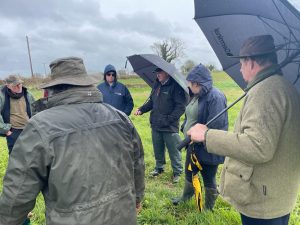
We recently discussed the emergence of Lucerne with leading seed developer Germinal at a test plot in South Gloucestershire, where a selection of 9 varieties are being grown under test conditions by a farmer who is an established advocate of Lucerne. Germinal are working closely with one of our customers. They love Lucerne and all the benefits it brings.

They have been growing it successfully for many years, and it’s fair to say, they know what they’re doing with it. As long as a few good rules are maintained and your soil is free draining, then you’ll be in a good place for many years with Lucerne.


Lucerne loves free draining soil, in the first year of growth it loves to establish a deep root system which equips it to be an excellent drought-tolerant plant. It performs best in soils at 6.5pH and above.


Conversely, Red Clover is far more accepting of acidic conditions and can perform below pH 5.7, but optimum performance and yields can be achieved at 6-6.5ph

Management

Good management of Lucerne is essential, ask your distributor or Agronomist that knows your soil for the best advice. A fine, level bed should be prepared before drilling, as this aids the establishment of both red clover and Lucerne, the rolling both before and after sowing can assist germination. It’s important not to drill seeds deeper than 15mm with most soils, although Lucerne can be drilled up to 20mm in sandy soils.

Cutting

  • The best time to cut Lucerne is when 5-10% of the plants are flowering (early bloom). At this time more than half the plant should have a new sprout coming from the crown.
  • When aimed for the maximal quality, harvest occurs in before bloom or late-bud stage. This will exhaust the stand too much, so if done so it’s advised to let at least one cycle in the 2nd half of the season flower. This will ensure the accumulation of sufficient root reserves.
  • Harvest by growth stage instead of calendar, will provide a more consistent forage yield and quality.
  • Lucerne is susceptible to damage from traffic, so don’t cut under wet conditions.

Autumn harvest

Timing of the last harvest in autumn is an important consideration. If winter dormant types are used, plants should have enough root reserves before they go dormant in the autumn.

Too much autumn cutting is not recommended. A good tip is to not harvest for a month (best: September) to ensure plant health. It’s also feasible to cut quite late autumn and let Lucerne go dormant with bare stubble instead of having new sprouts.


Stubble length of Lucerne

  • 6 cm in before-bloom stage.
  • 7 – 10 cm in all other stages.
  • Too low cutting damages crowns and new sprouts.


The growth pattern of both Lucerne and Red Clover follow a similar pattern to grass with yield and persistence dependent on proper establishment which affords deep root growth. As the day length becomes longer both Lucerne and red clover commit most energy to plant growth and away from root development. Lignification is relatively low until either plant begins to bloom.


Red Clover should be cut when the clover reaches late bud stage (at a plant length of approximately 30cm) or when the Lucerne is approximately at 10% bloom.


Lucerne and Red Clover are low DM, low sugar and due to the high protein levels have a high buffering capacity. When cut and it is necessary to wilt them. The speed of wilting can be increased without reducing protein content if mowing with a roller-conditioner. Avoid using flail-tine/impeller conditioners as these lead to exceptionally high leaf loss.


If you have not considered Lucerne before now, then it may be time to look at this high-performance crop that could reduce your spending on fertilisers and improve the protein value of your silage.

Related posts

Leave the first comment

Add to this to my list

Lucerne – Saving Fertiliser Costs

Just 100 years to be an overnight success!

The dramatic increase in fertiliser prices is not looking to slow down soon, many farmers are looking at medium- and longer-term alternatives. Some have said that this is a rude wake-up call to learn from what past generations before had done and done well.


Lucerne has been around for over 100 years, but in has been eclipsed by strong marketing and distributors’ need for farmers to spend. Maybe now is the time for both Lucerne and Red Clover to emerge as the incredible crops they truly are. They are both increasingly popular amongst farmers who acknowledge the long list of benefits of drilling silage crops that will fix their own nitrogen (N) levels.


With the added benefit of being drought tolerant, Lucerne and Red Clover can be grown widely, both are linked with higher intakes and improved livestock performance than with grass silage alone. Lucerne’s Protein values are particularly impressive. Red clover is rightly coupled with improved nitrogen (N) conversion to product N (milk or meat N). Of course, red clover can be directly grazed with high intake characteristics, but grazing Lucerne can increase the risk of bloat.

Which Soil?

We recently discussed the emergence of Lucerne with leading seed developer Germinal at a test plot in South Gloucestershire, where a selection of 9 varieties are being grown under test conditions by a farmer who is an established advocate of Lucerne. Germinal are working closely with one of our customers. They love Lucerne and all the benefits it brings.

They have been growing it successfully for many years, and it’s fair to say, they know what they’re doing with it. As long as a few good rules are maintained and your soil is free draining, then you’ll be in a good place for many years with Lucerne.


Lucerne loves free draining soil, in the first year of growth it loves to establish a deep root system which equips it to be an excellent drought-tolerant plant. It performs best in soils at 6.5pH and above.


Conversely, Red Clover is far more accepting of acidic conditions and can perform below pH 5.7, but optimum performance and yields can be achieved at 6-6.5ph

Management

Good management of Lucerne is essential, ask your distributor or Agronomist that knows your soil for the best advice. A fine, level bed should be prepared before drilling, as this aids the establishment of both red clover and Lucerne, the rolling both before and after sowing can assist germination. It’s important not to drill seeds deeper than 15mm with most soils, although Lucerne can be drilled up to 20mm in sandy soils.

Cutting

  • The best time to cut Lucerne is when 5-10% of the plants are flowering (early bloom). At this time more than half the plant should have a new sprout coming from the crown.
  • When aimed for the maximal quality, harvest occurs in before bloom or late-bud stage. This will exhaust the stand too much, so if done so it’s advised to let at least one cycle in the 2nd half of the season flower. This will ensure the accumulation of sufficient root reserves.
  • Harvest by growth stage instead of calendar, will provide a more consistent forage yield and quality.
  • Lucerne is susceptible to damage from traffic, so don’t cut under wet conditions.

Autumn harvest

Timing of the last harvest in autumn is an important consideration. If winter dormant types are used, plants should have enough root reserves before they go dormant in the autumn.

Too much autumn cutting is not recommended. A good tip is to not harvest for a month (best: September) to ensure plant health. It’s also feasible to cut quite late autumn and let Lucerne go dormant with bare stubble instead of having new sprouts.


Stubble length of Lucerne

  • 6 cm in before-bloom stage.
  • 7 – 10 cm in all other stages.
  • Too low cutting damages crowns and new sprouts.


The growth pattern of both Lucerne and Red Clover follow a similar pattern to grass with yield and persistence dependent on proper establishment which affords deep root growth. As the day length becomes longer both Lucerne and red clover commit most energy to plant growth and away from root development. Lignification is relatively low until either plant begins to bloom.


Red Clover should be cut when the clover reaches late bud stage (at a plant length of approximately 30cm) or when the Lucerne is approximately at 10% bloom.


Lucerne and Red Clover are low DM, low sugar and due to the high protein levels have a high buffering capacity. When cut and it is necessary to wilt them. The speed of wilting can be increased without reducing protein content if mowing with a roller-conditioner. Avoid using flail-tine/impeller conditioners as these lead to exceptionally high leaf loss.


If you have not considered Lucerne before now, then it may be time to look at this high-performance crop that could reduce your spending on fertilisers and improve the protein value of your silage.
Suitability suggestion

Best use:
Soil type:
Soil condition:
Duration:
Per acre pack: Kg
Price:
Amount
Variety - Type